




Start with one product and one intended user
A request for a premium pet supplement leaves the decisions that determine its cost and usefulness unanswered. Begin with the species, life stage, nutrition purpose and feeding routine. A powder mixed into a dog's evening meal has a different brief from a film offered to a cat that refuses unfamiliar textures. Describe the owner's task: opening one sachet, measuring a scoop, counting tablets or offering a chew. The format should fit that task.
Write the first brief around a single proposed SKU. Include the sales territory and whether the product will complement a complete diet. FDA describes treats and supplements as products that are often not complete and balanced. A small nutrition product should not borrow the positioning of a complete food simply because its ingredient list contains vitamins.
Define OEM, ODM and white label responsibilities
For a private label pet supplement manufacturer enquiry, state whether the brand supplies a formula, wants an existing concept adapted, or needs custom pet supplement formulation. Record responsibility for the recipe, ingredient sourcing, flavour work and packaging. A turnkey solution should identify the included work and the points where the buyer approves a specification or sample.
Turn a benefit idea into a measurable specification
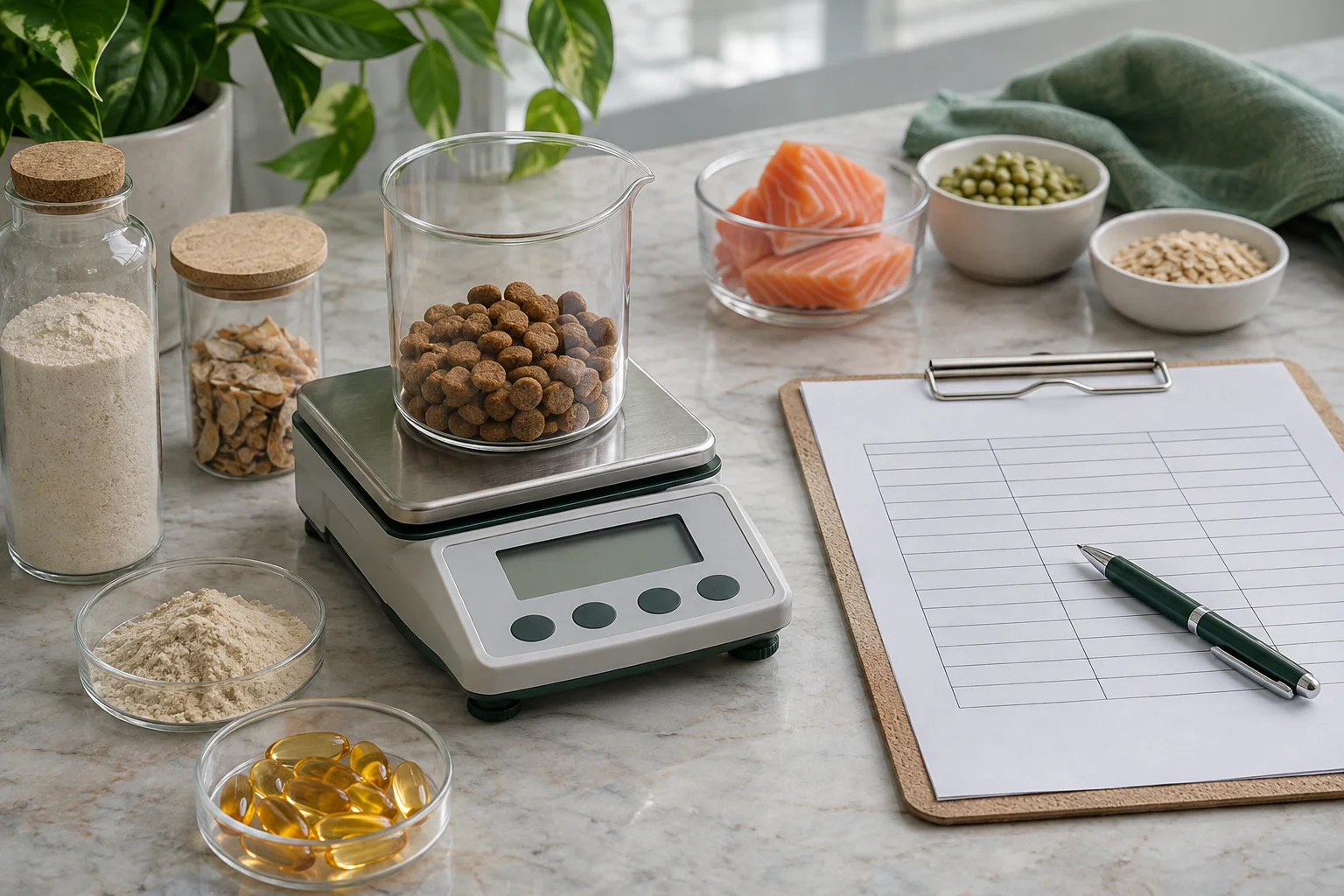
A skin and coat concept needs more detail than a fish oil ingredient name. Ask what will be declared per daily serving, how that amount will be measured and which method will appear on the specification. For an oil project, the total oil weight and the EPA and DHA contribution are separate fields. For a probiotic project, specify the organism identity and the point in shelf life at which the viable count is expected to meet its declared value.
Keep the proposed retail statement next to the specification. If a statement depends on a test, identify that test and who will review the result. If the evidence concerns an ingredient supplied in another format, record the difference. This avoids asking a finished product to carry a promise that its own formulation and serving have never established.

Choose a format around the serving
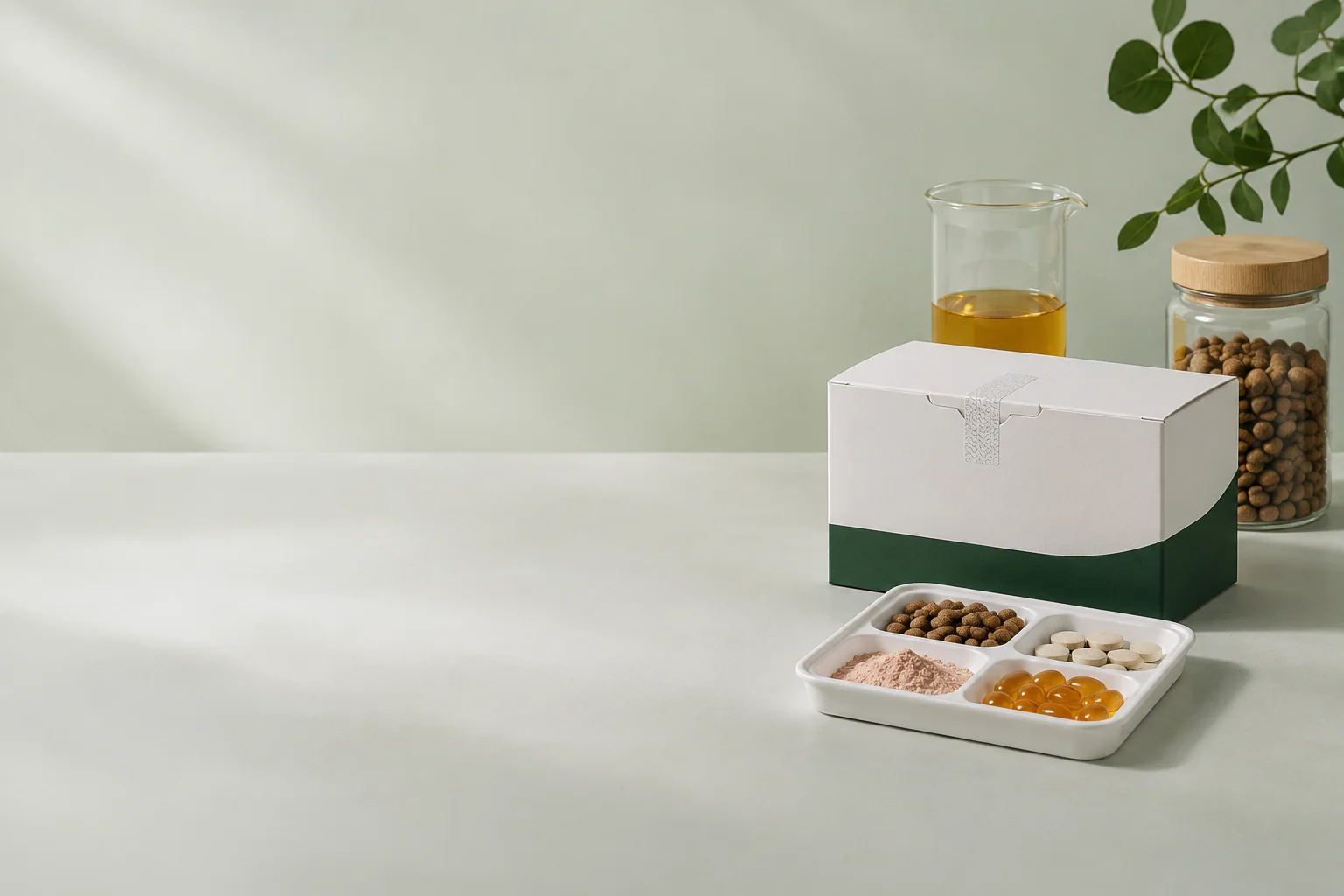
Discuss the amount that has to fit into each unit before selecting the package render. Oral films have limited space for solids, and the film base, flavour system and handling properties share that space with the nutrition ingredients. A larger required serving can change the format discussion. Powders, tablets, soft chews, liquids and capsules each create their own measurement and handling questions.
Build a small comparison using the same intended daily contribution across two suitable formats. Ask about unit dimensions, serving count, feeding instructions and the owner's handling steps. Include the pet's likely acceptance of the texture and aroma as a question for evaluation. An appealing sample photograph cannot answer whether the animal will accept repeated use.

Give packaging an operating brief
Specify the period of use after opening, the storage environment and the distribution route. A carton does not answer the same question as a sealed primary pack. The primary pack protects the product; the carton provides space for instructions, identifiers and retail presentation. Explain whether the customer will open the container daily and whether a household may contain more than one pet.
List the practical details that artwork must accommodate: unit count, net quantity, species statement, serving instructions, ingredients, storage directions and batch identification. Leave space for destination-specific text after the market review. Agree how date coding will be applied and checked on the actual packaging material. A flat artwork proof cannot show whether a code remains legible on a curved bottle.

Compare quotations against the same assumptions
Send each supplier the same formula target, pack count, packaging construction and quality requirements. Request the scope in writing, including which tests, printed components and development work are included. Otherwise two prices may describe materially different products. Keep currency, trade terms and shipping responsibilities visible in the comparison without assuming that a unit price includes import costs.
Confirmed starting quantities are 60,000 oral films per SKU; 100 kg for functional soft chews and nutritional treats; 50 kg for nutritional powders; and 1,000 bottles for liquid drops or pet gummies. Whether non-film minimums apply per recipe or SKU, and whether orders can be mixed, needs confirmation. New formula costing usually takes about 1–2 days after the recipe, proportions and packaging are defined. Sample availability, sample charges, development, testing, production and transport are confirmed separately. There is no universal published selling price or fixed delivery promise.
- The same formula and daily serving target
- The same primary pack, carton and unit count
- An itemised testing and documentation scope
- Written currency, trade terms and shipping responsibilities

Agree what release will mean
Before production, ask for an agreed specification and the proposed certificate of analysis. Define which characteristics will be checked on each batch, which need a development study and which belong to a stability programme. A certificate should identify its product and batch. A passing result for one sample does not answer every question about future batches or the entire shelf life.
We can provide product specifications and a COA. Third-party heavy metal, microbiological and mycotoxin testing can be arranged with the scope, laboratory, cost and timing agreed for the project. Discuss sample custody and acceptance criteria before commissioning the work. Buyers can also request an appointment for a video visit to our production base in China.
Check the manufacturing and ownership evidence
Ask which formats are produced in which reviewed process area, where R&D and QC tasks take place, and which tasks use external providers. Request the evidence relevant to that scope. Product liability insurance, patent licences and raw-material authorisations need their own documents and agreed coverage; a brochure phrase cannot establish those rights or protections.

Keep the final brief ready for revision
Assign a version number to the formula, specification and packaging text. When one changes, review the related documents before approving the next sample or print run. A flavour change can affect the ingredient statement, and a pack-count change affects the owner's directions and the retail description. Save the approved sample reference with the relevant version.
A useful first enquiry contains a target species, nutrition direction, preferred format, destination market, approximate order requirement and packaging idea. Send those details with the questions you still need resolved. The next discussion can then focus on choices that affect the actual product instead of repeating a broad catalogue request.
Put sample and delivery milestones in writing
A sample batch should have an agreed purpose, recipe version and acceptance record. Keep sample availability and charges separate from a production order. After sample approval, the schedule still depends on material readiness, packaging approval, production allocation, testing and release. A request for fast lead-time OEM should become a dated project schedule with those dependencies recorded.
Nutrition information for OEM/ODM planning. Individual pet care decisions belong with a veterinarian.