


Pet nutrition knowledge hub
Explore 150 practical questions about private label pet supplements, custom formulas, ODF oral films, quality documents, packaging and destination-market review.
Answers support product planning and informed discussion. Ask a veterinarian about an individual animal's health or feeding needs.
150 questions
Project fit
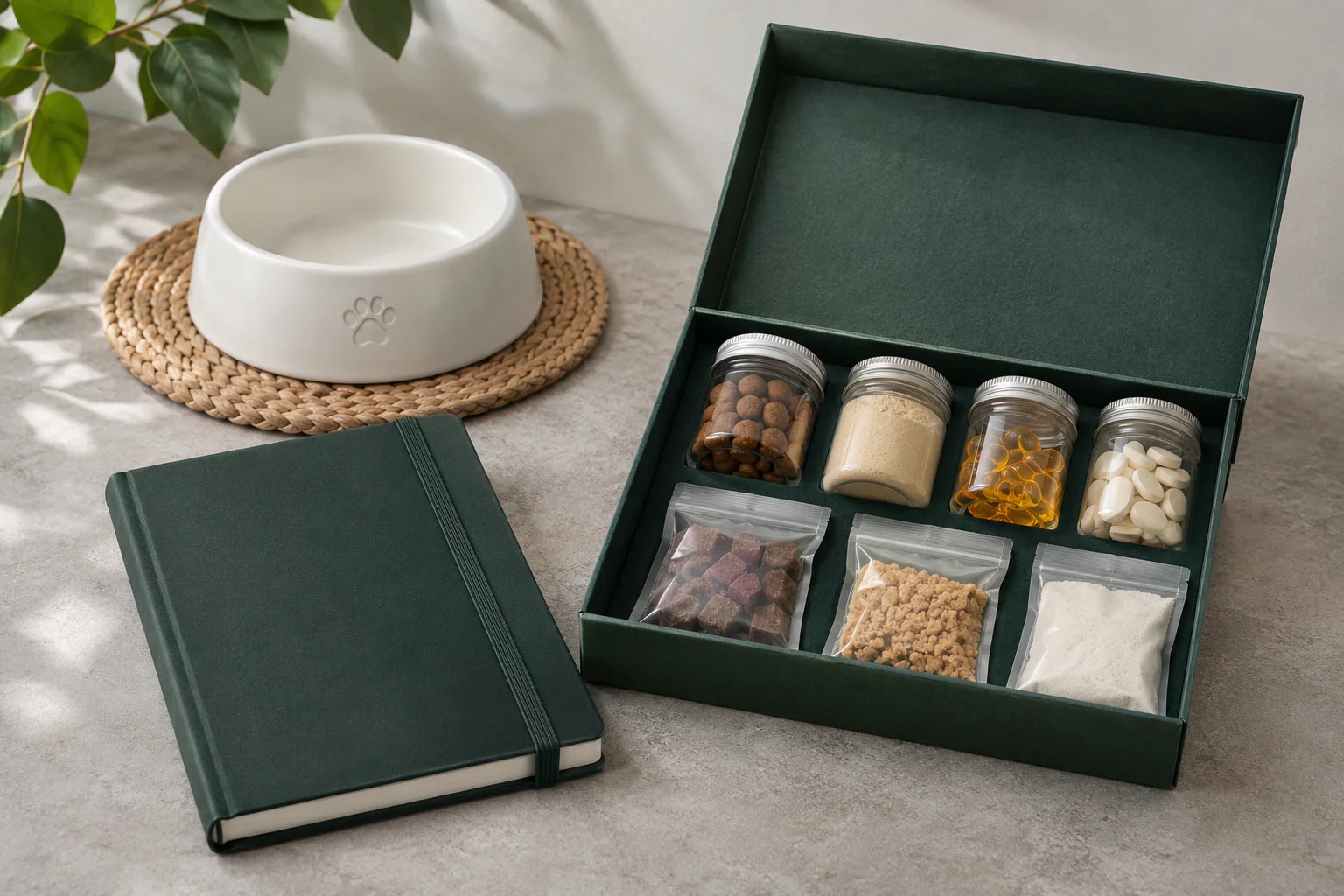
What information makes an OEM enquiry useful?
State the intended species, life stage, nutrition purpose, sales market and preferred format. Add your proposed serving and pack count if you have them. Ingredient exclusions and target order requirements help us identify the decisions that need technical or commercial review before a quotation.
How does OEM differ from ODM in a pet nutrition project?
OEM commonly starts with a buyer's defined product brief, while ODM can involve developing a concept around the buyer's needs. The actual responsibility depends on the agreement. Specify who controls the formula, artwork, testing programme and market review instead of relying on the abbreviation alone.
Can a brand begin with one product?
A focused initial SKU can make the formula, packaging and evidence requirements easier to define. Choose the animal and nutrition purpose first. Ask for the order conditions for that format; the minimum for oral films should not be assumed to apply to another product type.
Do you discuss both dog and cat products?
Dog and cat nutrition directions are available for discussion. Each needs its own ingredient, serving and suitability review. A product shown in a general catalogue is not automatically suitable for both species, and one animal's feeding directions should not be copied onto the other's pack.
Can you work from a competing product's label?
A reference label can explain your desired positioning, format or serving routine. It does not reveal the complete manufacturing recipe or grant permission to copy a design. Develop an original specification and review the ingredients and claims for your intended market.
Should a nutrition range be organised by ingredient or benefit?
Begin with the customer's use case and the intended animal. Then identify the ingredients and serving needed to support that purpose. An ingredient-led name may suit some brands, but the product still needs clear directions and a reason to sit beside other items in the range.
Can the same range serve online stores and veterinary channels?
Channels may request different documents, pack sizes or claims reviews. Identify the channel requirements in the brief, including any technical review expected by a distributor. Selling through a veterinary channel does not itself make a product a veterinary medicine or establish clinical efficacy.
What should a distributor ask before requesting exclusivity?
Define the territory, products, term, sales commitments and rights being discussed. Separate brand exclusivity from formula exclusivity and packaging design rights. Availability of any arrangement requires commercial agreement; a catalogue conversation does not reserve a market or product for a buyer.
Can an existing formula be adapted for another market?
First compare the destination's ingredient, category, label and claims requirements with the existing specification. Changes may affect flavour, serving or packaging. Request a documented review before treating the old formula and evidence as suitable for the new market or language version.
How can a buyer make two supplier proposals comparable?
Give both suppliers the same serving target, ingredient brief, packaging construction and test scope. Ask each to state exclusions and assumptions. A price comparison is useful only when unit count, product specification and included work describe equivalent goods and responsibilities.
What is included in a turnkey private label pet nutrition project?
Define the services in writing: formula review or development, format selection, ingredient sourcing responsibilities, samples, packaging, testing and release documents. Identify who approves each item. We coordinate the agreed work through our production base in China; a turnkey description does not make every test, registration or freight charge part of a standard price.
Can several dosage forms be developed for the same brand?
Discuss the formats in one range brief, then identify the process, specification, minimum and release requirements for each. Do not assume that oral films, soft chews, powders and oils are made on one line or in one process area. The production scope and any external work need confirmation for the proposed range.
How does a pet premixed feed brief differ from a finished supplement brief?
A premix brief needs the intended base feed, inclusion rate, mixing instructions and resulting nutrient contribution. A finished supplement brief also defines the consumer serving and retail presentation. Clarify the proposed classification and process before a pet premixed feed OEM/ODM or granular supplement quotation; a premix name alone does not establish nutritional completeness.
Can a brand request product descriptions and packaging copy?
Include the required technical descriptions, pack text and approved image scope in the brief. Final wording must match the actual recipe, serving, specification and destination review. Development photographs and packaging concepts should not be turned into certification claims, clinical evidence or a promise of a finished retail label.
Formulation decisions
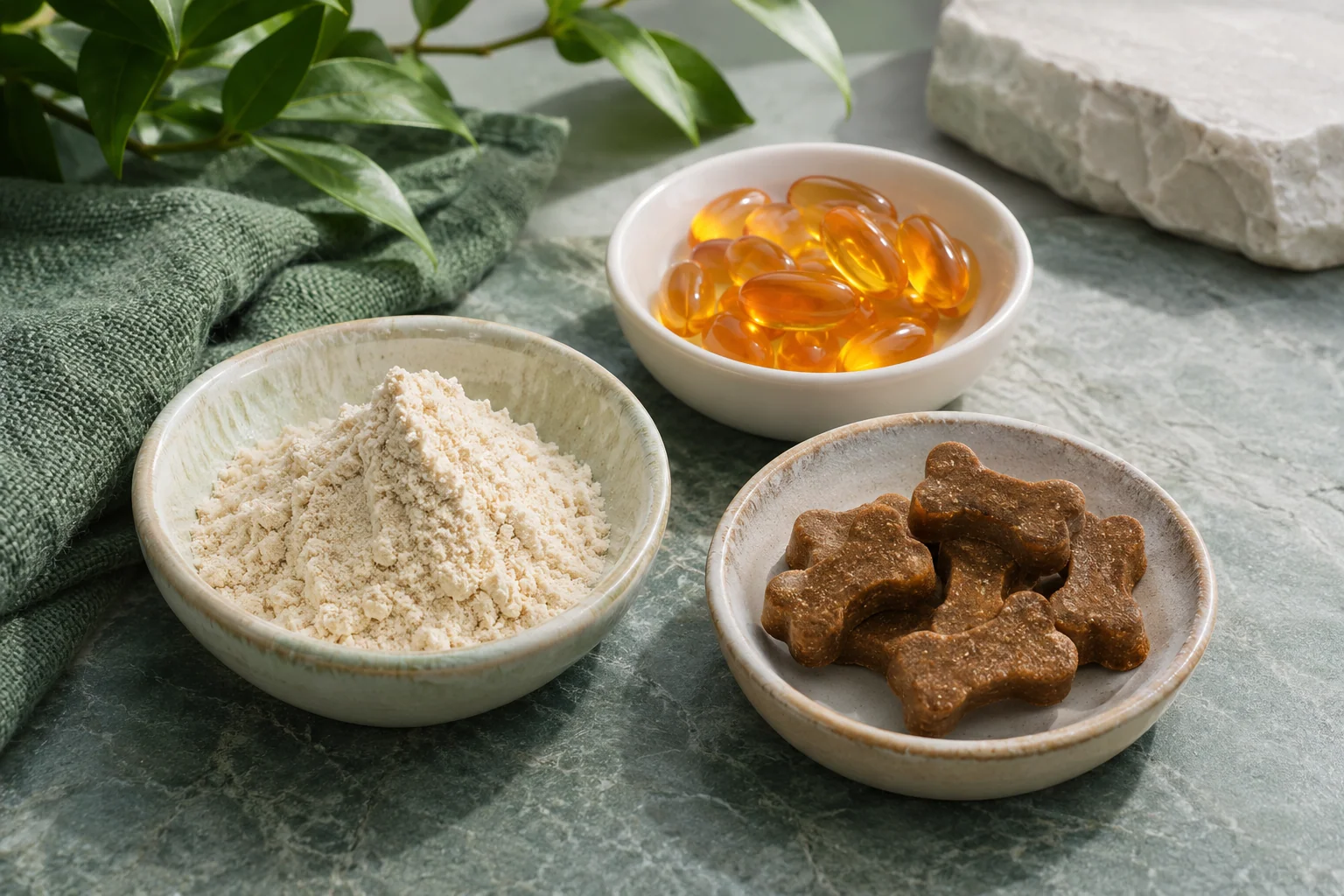
What is the difference between ingredient weight and active content?
An ingredient's total weight can include components beyond the nutrient a label declares. Specify the measured component and its amount per serving. Fish oil weight and EPA plus DHA content, for example, are different quantities and should be separate fields in the brief.
Should every ingredient on a reference label be retained?
Review what each ingredient contributes to the intended product and how it affects suitability, manufacturing or labelling. More ingredients do not establish a more useful formula. Remove duplication deliberately and assess the whole recipe before deciding which reference-label elements belong in the new brief.
How should daily serving size be selected?
Serving size requires a review of the formula, intended species, life stage and complete feeding routine. It should not be selected only to make a pack last a convenient number of days. Record both the unit amount and the proposed daily contribution for technical review.
Can one serving instruction cover every dog size?
A single instruction needs a sound basis for the intended population. Body size, life stage, formula and other food intake can affect the assessment. Ask the technical reviewer to define the intended use and any necessary weight bands before approving the pack text.
What does a flavour brief need to include?
Describe the intended aroma, animal-derived ingredients or exclusions and the planned feeding method. Distinguish a named flavour from a verified ingredient source. Acceptance must be evaluated with the actual recipe and target species; an owner liking the smell is not a pet acceptance result.
Can botanical ingredients be treated as automatically gentle?
Botanical identity, extract specification, amount and species suitability all need review. The word natural does not establish safety. If a reference formula contains a botanical, request its specification and assess the proposed use before including it in the development recipe or promotional text.
How should ingredient exclusions be documented?
List the exact materials you want excluded and explain whether the request concerns formulation, cross-contact or a marketing statement. These are different requirements. Ask what controls and supporting documents are available before approving an exclusion claim on the finished product.
Can a formula claim to be suitable for sensitive pets?
That claim needs a clear meaning and appropriate support for the intended animals. Specify the ingredients and use conditions being discussed. Do not infer hypoallergenic suitability from a short ingredient list or a single flavour name, especially where diagnosed conditions require veterinary management.
What makes a prototype different from a production specification?
A prototype explores a recipe or physical format. The production specification defines the agreed characteristics for manufacture and release. Keep sample observations with the formula version and identify unresolved points before approval; a sample's appearance alone does not establish its final composition or stability.
When should a formula change trigger another label review?
Review the label whenever a change can affect the ingredient statement, declared amounts, serving directions, cautions or claims. Flavour and carrier changes can matter too. Link the approved artwork to the formula version so that production and the retail description refer to the same product.
What proves permission to use a patented ingredient or formula?
Request the applicable licence or authorisation and check its legal entity, permitted use, territory and validity. Raw-material purchase records and laboratory results answer different questions from intellectual property rights. A request for a patent formula or authorised ingredient does not establish that the proposed project already holds those rights.
What changes when a base formula gets a different strength?
Recalculate the amount per unit and per daily serving, then review loading, unit weight, uniformity and feeding directions. A stronger version may need a different unit size or format. Keep a separate formula version and assess the effect on testing, packaging, claims and the commercial minimum before sample approval.
How should a new soft-chew flavour be evaluated?
Specify the flavour source, excluded proteins, texture and unit size with the recipe version. Agree how first acceptance, repeat acceptance and owner handling will be recorded. Changes to a flavour system may also affect the ingredient statement and stability questions. Sample availability and the evaluation schedule need separate confirmation.
Can a calming-chew enquiry include melatonin?
Identify the exact ingredient, proposed amount, species and destination before discussing feasibility. Melatonin is not treated as a universally accepted pet nutrition ingredient or a standard inclusion in our catalogue. A calming concept still needs review of formula suitability, intended claims and the applicable market requirements.
Does a hemp calming-chew enquiry establish a CBD product offering?
No CBD pet product offering is established by this catalogue. A botanical brief must identify the plant part, ingredient form, composition and destination for review. Do not use hempseed oil, hemp extract and CBD as interchangeable descriptions. We do not assume safety, suitability or market permission from a broad hemp keyword.
Can active-ingredient amounts be adjusted to a buyer specification?
Provide the exact ingredient forms and target declarations per unit and per daily serving. Feasibility depends on the whole formulation, format, species and destination. A change may require different unit dimensions, repeat testing and revised instructions. An initial adjustment request does not establish an approved formula or a confirmed production price.
Oral films

Are pet oral films the same as human breath strips?
The shape may look familiar, but a pet product needs its own recipe and species-specific evaluation. A human breath strip can contain unsuitable ingredients or amounts. Human oral-film manufacturing experience does not replace a review of the finished pet product and feeding method.
Will every proposed ingredient fit into one film?
Film loading is limited by the unit's size and the recipe needed to form a usable film. Ask for an assessment of the desired serving before fixing one film per day on the carton. A different format may be worth comparing when the required amount is larger.
Does a dissolving film prove sublingual absorption?
Disintegration and absorption answer different questions. A film can break down without establishing the route or extent of uptake of every ingredient in a dog or cat. Any absorption claim needs suitable evidence for the particular formulation, animal species and conditions of use.
Can you promise a five-minute effect for pet films?
We do not assign a universal onset time to nutrition films. A format alone cannot establish the time to an animal outcome. Define the nutrition purpose and review the evidence for the specific product before considering any performance statement in customer-facing material.
What should a film handling sample be used to check?
Observe whether the unit can be removed from its pack, handled as directed and offered using the proposed method. Record tearing, sticking or other difficulties with the sample version. These observations inform development but do not replace composition, safety or shelf-life evaluation.
Can oral films replace toothbrushing?
A nutrition film should not be presented as a replacement for a pet's dental care plan. Fresh-breath positioning does not prove plaque removal or treatment of oral disease. Ask a veterinarian about persistent bad breath, discomfort or changes in eating behaviour.
Can films be split to make a smaller serving?
Do not assume a partial film provides a defined fraction of every ingredient. Any splitting instruction needs an assessment of content distribution, handling and the intended animal's serving. Use the approved feeding directions for the final product and request a different unit specification if needed.
Can several film formulas be mixed within one order?
The oral-film minimum is 60,000 films per SKU. Mixed ordering and packaging allocations require project confirmation. Provide the proposed assortment and quantity of each SKU so the technical, packaging and commercial conditions can be reviewed together.
How many films belong in one retail box?
Box count should follow the intended serving routine and brand requirements. Typical concepts contain 10 to 20 films, while the final arrangement is confirmed for the project. State whether each unit needs individual identification and how the owner will store remaining units.
Is an oral film automatically suitable for an animal that resists handling?
Acceptance and handling need evaluation for the intended animal and owner. Thinness does not guarantee a stress-free feeding experience. The approved instructions should be practical and should not encourage forcing a product into an animal that is struggling or having difficulty swallowing.
What information is needed for a herbal and vitamin ODF formula?
Name the botanical species, plant part, extract specification and proposed vitamin forms and amounts. Discuss the total solids and intended contribution per film before artwork. Multiple botanical ingredients can affect the loading and handling brief. Pet oral film custom formulation remains subject to species, technical and market review.
Is there one required dissolution time for every pet ODF film?
There is no universal project-approved time on this site. Agree whether the test measures disintegration or dissolution, with the medium, temperature, endpoint and sampling method recorded. Set acceptance criteria for the actual formulation. A fast test result cannot establish a clinical onset or absorption percentage in dogs or cats.
Which variables belong in an oral-film performance investigation?
Review unit thickness, ingredient loading and distribution, handling conditions, exposure to humidity, storage history and primary-pack seal integrity. Keep the recipe and test method with the observations. Comparing results from different methods or differently stored samples can conceal the reason for a change in disintegration or handling.
What should a breath-freshening oral-strip brief measure?
Define the ingredient declarations, film size, daily serving, handling method and intended oral-care wording. Consider pet acceptance and the actual use routine. A breath-freshening description does not establish treatment of dental disease or the cause of persistent bad breath. Keep cleaning and veterinary dental-care advice separate from a nutrition claim.
Choosing a format

When is a powder worth discussing instead of a chew?
Compare the required daily amount and how the owner will offer it. A powder brief should address measurement and mixing into food; a chew brief should address unit size, texture and acceptance. Evaluate both against the same nutrition target before choosing packaging.
What information is needed for a tablet project?
Provide the proposed ingredients, daily serving and target species, then discuss tablet dimensions, unit weight and feeding method. Bottle count comes after those choices. Ask which physical and composition checks will form part of the finished-product specification and release documentation.
Can soft chews be described as treats?
The description must match the product's intended use and destination requirements. A chew-shaped supplement still needs clear feeding directions and ingredient review. Calories and any overlap with the rest of the diet should be considered, regardless of whether the brand uses a treat-like presentation.
Are liquid drops measured by counting drops?
A drop count needs support from the actual formulation and dispensing system. Liquid properties and the device can affect delivery. Specify the intended serving volume or amount and request a practical assessment of how the chosen pack will let the owner measure it.
Does a softgel shell make an oil suitable for cats?
Capsule construction does not establish species suitability. Review the complete fill, shell ingredients, capsule dimensions and intended feeding method for cats. The proposed daily contribution and any existing diet or veterinary restrictions still need assessment before directions are approved for the product.
Can a hard capsule be opened and mixed into food?
That instruction should be assessed for the particular formula and capsule system. Opening can change handling, acceptance and how the owner measures the serving. Publish only the approved method and request an alternative format if the intended routine requires a different approach.
What does single-dose packaging solve?
A portion pack can reduce the owner's need to measure when its delivered contents match the approved serving. It still needs fill accuracy, compatibility and opening checks. Specify the actual contents and use method before assuming that any catalogue container fits the project.
Is a card pack a separate supplement format?
A card is a presentation or packaging concept; the product inside still needs a defined formulation and primary container. Ask which material protects the contents and how each portion remains identified. Decorative packaging cannot substitute for a product and packaging compatibility assessment.
Can a jar and sachet use the same powder recipe?
They may be considered, but each packaging configuration needs review for protection, measurement and use after opening. A repeated-opening jar and a sealed portion sachet create different conditions. Record the approved pack construction with the recipe and the evidence supporting its storage directions.
Should every format in a range use the same flavour?
A shared flavour concept can support brand consistency, but the actual flavour system may behave differently in each format. Evaluate acceptance and technical suitability by product. Ingredient statements and any source-related claims must follow the actual recipe used in each SKU.
Can a fish-oil liquid and softgel deliver the same omega-3 amount?
Compare EPA and DHA per intended daily serving, separately from total oil weight. Then review the dispenser or unit count, shell ingredients, feeding method and packaging. The two formats require their own specifications; a shared fish-oil source or similar package colour does not establish equivalent nutrient delivery.
Can one nutrition concept become both an oral film and a soft chew?
Start with the same intended species and daily nutrient contribution, then prepare a separate formula and serving brief for each format. Film loading and chew unit weight create different constraints. Review pet acceptance, packaging, stability and claims independently. A result for one format should not be presented as a result for the other.
Ingredients and declarations
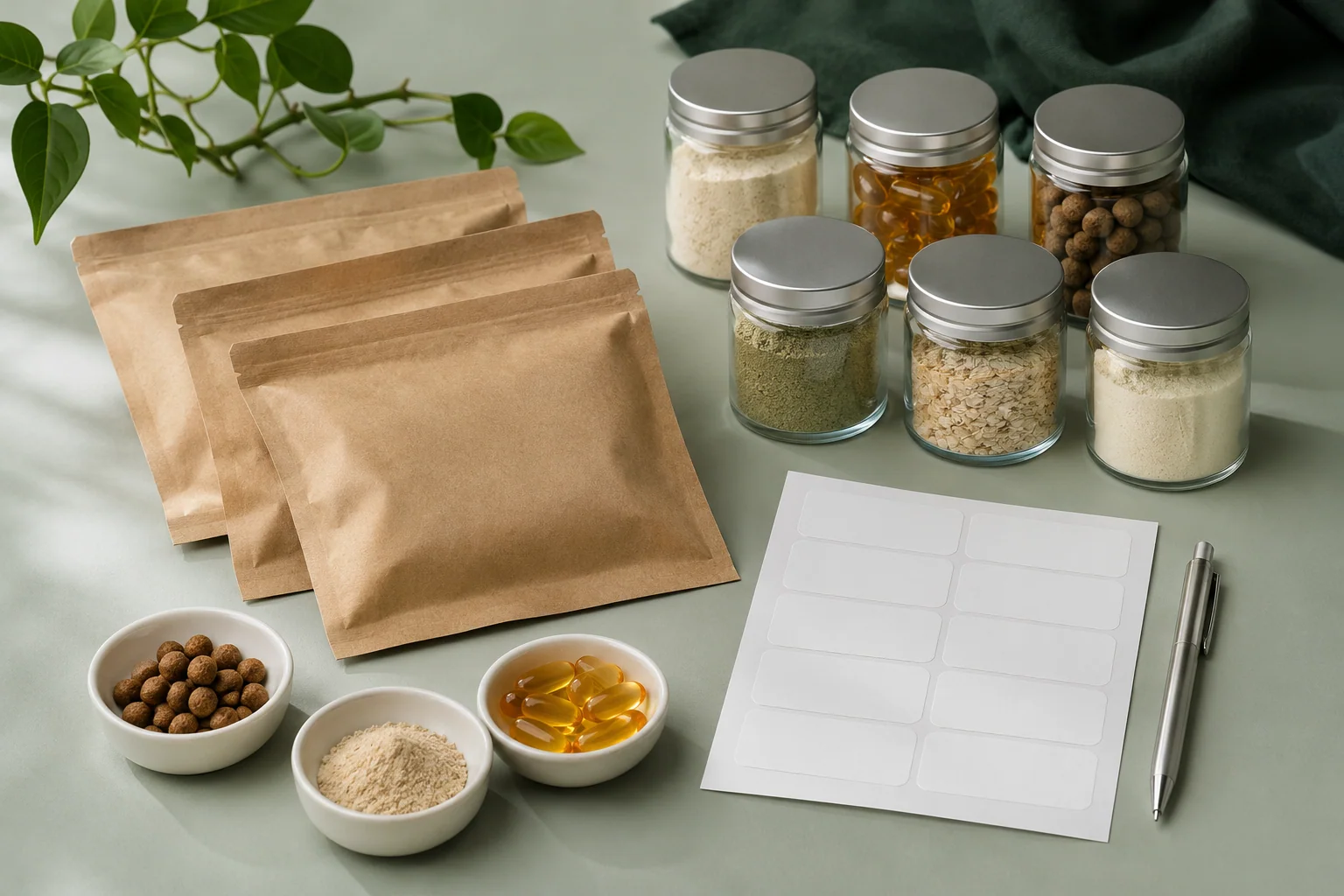
What should an omega-3 enquiry specify?
Identify the intended species, source preferences, proposed daily serving and whether EPA and DHA will be declared. Ask for the ingredient specification and finished-product measurement basis. Total oil weight, source name and fatty-acid contribution should not be treated as interchangeable descriptions.
Does salmon oil automatically have a fixed EPA and DHA level?
A source name does not define a fixed fatty-acid composition for every product. Request the oil specification and the proposed declaration per serving. Source identity, concentration, processing and relevant quality criteria belong in the project records before a label amount is approved.
What should a probiotic label discussion cover?
Ask for organism identity, the declared viable-count basis, serving size and the time point supported by the evidence. Include storage and packaging in the discussion. A large number printed without those details is insufficient for evaluating the actual finished product or comparing two concepts.
Is a higher probiotic count always the better product?
Count alone cannot define whether a product fits its intended purpose. Review the organisms, formulation, serving and supporting evidence together. Compare products using the same measurement basis and shelf-life point, and avoid borrowing evidence from a different organism or recipe without assessment.
Are prebiotics and probiotics interchangeable ingredients?
They describe different ingredient roles and should be specified separately in the brief. A blend using both still needs ingredient identity, quantities and a finished-product assessment. Do not describe a product as containing live microorganisms solely because a prebiotic ingredient appears on its label.
Can a multivitamin be added to any complete diet?
The animal's total intake needs review before adding vitamins and minerals to a complete diet. A multivitamin name does not establish that extra nutrients are needed or suitable. Ask a veterinarian about the specific animal and give the formulation reviewer the intended feeding context.
Should taurine be included in every cat supplement?
Inclusion should follow the nutrition purpose and the whole feeding assessment. A cat-specific product name does not settle the amount or necessity of an added nutrient. Review the actual diet, formula and serving instead of adding taurine as a branding requirement alone.
Can a joint nutrition formula use several overlapping ingredients?
Multiple ingredients can be discussed, but each needs a purpose, specification and suitable serving. More names do not establish a better animal outcome. Ask the reviewer to evaluate the complete recipe and the evidence relevant to any proposed statement on the finished product. A glucosamine, chondroitin, MSM or hyaluronic acid enquiry should state each ingredient form and proposed amount per daily serving. Combining the names does not establish the performance of the finished blend.
How should a collagen claim be checked?
Confirm the actual ingredient identity and specification before choosing the claim. Gelatin, collagen-derived ingredients and a specific collagen type should not be treated as identical without documentation. The ingredient statement and promotional wording must describe the material used in the approved recipe.
Can a botanical extract's name be enough for a quotation?
An extract name leaves questions about botanical identity, plant part, extraction and relevant composition. Request a defined material specification and review its intended use. Two materials sharing a common plant name can represent different quotation assumptions and different suitability questions.
What should a pet B-complex or multivitamin brief specify?
List each vitamin form and the proposed declaration per daily serving. Include the intended species, life stage and base diet so the total intake can be assessed. A full B-complex label does not establish that every animal needs an added multivitamin or that a higher declared amount is appropriate.
What needs review in a prebiotic, probiotic and enzyme blend?
Identify each probiotic strain, the declared viable count and the point in shelf life it applies to. State the prebiotic amount and the enzyme identity and activity units. Review compatibility, processing and storage with the actual formula. Combining three ingredient categories does not establish that one method can measure every declaration.
How should glucosamine, chondroitin and MSM amounts be compared?
Specify the ingredient forms and the amount contributed by the intended daily serving, including how any declared active content will be measured. Keep the full recipe and species in the comparison. A dog hip and joint soft-chew concept needs review of the finished formula; combining ingredient names does not establish treatment of joint disease.
What should a hyaluronic-acid joint nutrition enquiry include?
Provide the ingredient specification, proposed amount per unit and daily serving, preferred format and target species. List the other proposed joint ingredients so the whole formulation can be reviewed. We do not infer a clinically effective combination or an approved claim from an ingredient list in an initial enquiry.
Does a gut-skin axis concept justify an allergy claim?
No. A gut-skin axis formulation brief should identify its proposed ingredients, intended nutrition contribution and supporting evidence questions. It does not establish treatment of skin allergy or an allergic animal. Keep skin and coat support wording tied to the actual product, and refer suspected allergy to a veterinarian.
What is needed for a SAM-e liver and gallbladder nutrition concept?
State the ingredient form, assay, proposed daily contribution and intended species. Review any botanical blend, packaging and stability requirements with the actual formula. Liver and gallbladder support is a development direction here; it does not establish disease treatment, medicine compatibility or suitability for an animal with an existing condition.
How should cranberry, urinary and kidney nutrition ideas be separated?
Define the species, ingredient forms and intended nutrition purpose for each proposed product. Cranberry urinary concepts and kidney nutrition need their own formula and claim reviews. An organ name does not demonstrate clinical benefit. Animals with urinary symptoms or diagnosed kidney disease need veterinary assessment rather than a generic catalogue selection.
How do we brief a cat taurine product for heart and eye nutrition?
Specify the taurine declaration per unit and per daily serving, the preferred format and the intended base diet. State the life stage and proposed nutrition wording. A cat taurine supplement ODM enquiry does not establish a need for extra taurine in every cat or prove a heart or vision benefit for the finished product.
What makes a mushroom beta-glucan powder specification useful?
Identify the mushroom species, material or extract form, declared beta-glucan measure and analytical method. State the proposed daily serving and target animal. A mushroom immune-support powder brief should ask what the finished formula can substantiate; an immune-booster phrase is not a specification or a disease-prevention claim.
How should senior-pet and working-dog nutrition projects differ?
Describe life stage, base diet, activity, preferred serving routine and intended daily nutrient contribution. A senior dog or cat brief may raise different formulation questions from a working-dog concept. We discuss muscle maintenance as a nutrition direction without promising muscle gain, recovery from disease or a universal formula for all animals.
Pet care and responsible use
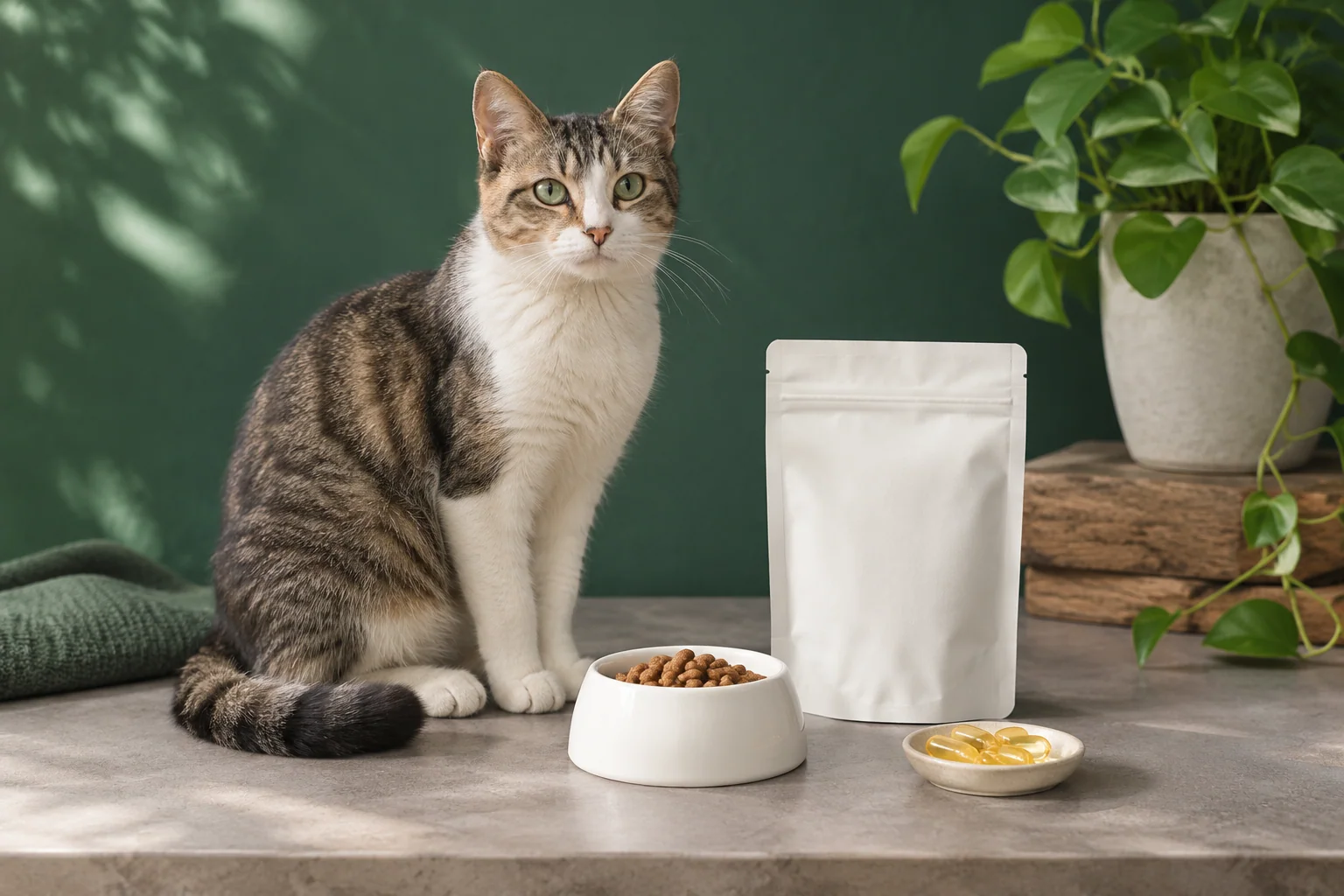
Does a healthy pet always need a daily supplement?
A healthy animal eating an appropriate complete and balanced diet does not automatically need additional nutrients. Discuss a specific purpose with a veterinarian before adding products. For a brand, this means defining a real use case instead of implying that every pet's normal food is inadequate.
Can a supplement treat diarrhoea or repeated vomiting?
Persistent diarrhoea, repeated vomiting or suspected motion sickness needs veterinary assessment. We do not position an anti-diarrhea gut supplement or a vomiting-relief botanical blend as treatment or emergency care. A digestive nutrition brief should define species, ingredients, daily contribution and appropriate support wording after the underlying concern has been reviewed.
Can calming nutrition replace a behaviour assessment?
A nutrition product should not substitute for investigating a pet's distress, environment or health. Ask a veterinarian or qualified behaviour professional about an individual animal. A formulation discussion must not promise sedation, treatment of anxiety or a fixed response time without appropriate evidence and review. A pet calming anxiety-relief supplement brief should separate routine nutritional support from a claim to treat an anxiety disorder. The wording and suitability of the actual formulation require review.
Can dogs and cats use human caffeine energy pouches?
Human caffeine pouches and caffeine energy pouches are outside our pet nutrition range and must not be offered to pets. Caffeine is a potential danger to animals. If a pet ingests one, contact a veterinarian promptly and keep the packaging available for identification.
Are human gummy vitamins suitable for a pet?
Do not substitute a human vitamin product for a pet product. The ingredients, sweeteners and amounts may be unsuitable for the animal. A familiar vitamin name does not establish safety; ask a veterinarian about any accidental ingestion or proposed supplement use.
Can supplements be used while a pet takes medication?
The animal's veterinarian should assess the complete ingredient list and proposed intake alongside the medication. Give the actual label and any available specification, including botanicals and flavour ingredients. Avoid assuming that a nutrition product cannot interact simply because it is sold without a prescription.
Are puppy and kitten products interchangeable with adult products?
Life stage is part of the suitability assessment. A smaller serving of an adult product is not automatically appropriate for a growing animal. Specify the intended age group during development and use only the final product's approved species and life-stage directions.
Can a supplement make a home-prepared diet complete?
A product needs a specific formulation and feeding basis to serve that role. A general multivitamin or topper should not be assumed to balance an arbitrary recipe. Consult a veterinary nutrition professional about the full diet and the exact ingredients and quantities being used.
Can a supplement be marketed as poisoning first aid?
No. We do not market vitamin B6 detox supplements or other nutrition products as poisoning first aid. Suspected accidental ingestion requires prompt veterinary advice. An ingredient name in a nutrition catalogue does not establish an antidote, an emergency dose or a safe home treatment.
What should an owner do after a suspected adverse reaction?
Stop offering the product and seek veterinary advice about the animal's symptoms. Retain the pack, batch code and remaining contents, and record when and how much was given with other foods or medicines. Those details help a professional assess the event and support a product enquiry.
Can an electrolyte nutrition product be sold as dehydration treatment?
We do not position electrolyte supplements as treatment for clinical dehydration or a substitute for veterinary care. A nutritional electrolyte OEM brief should define the species, ingredient amounts, serving and intended use. An animal showing dehydration, persistent vomiting or diarrhoea needs professional assessment before routine nutrition decisions.
Can a respiratory nutrition brief promise to stop a pet cough?
We do not offer nutrition products as cough treatment. A respiratory or herbal nutrition enquiry needs a defined species, formula and appropriate support wording. Coughing can require veterinary assessment; neither a botanical ingredient list nor an oral-film format establishes that the product treats the underlying problem.
Can a B-vitamin or herbal product claim nerve-pain relief?
We do not position B-complex vitamins or herbal nutrition blends as treatment for nerve pain. The proposed nutrient forms, amounts, species and daily serving can be reviewed as a nutrition brief. Pain and suspected neurological problems require veterinary assessment; a supplement catalogue cannot establish diagnosis or a treatment plan.
Quality and testing
What does a certificate of analysis actually describe?
A COA presents selected results for an identified product sample or batch. Check the identifiers, units, criteria and methods against the agreed specification. It does not by itself establish clinical efficacy, destination approval or every characteristic of the product throughout its shelf life.
Can I request specifications before approving production?
Product specifications can be provided for review. Agree which composition, physical and quality criteria apply to the finished product and how they will be checked. Keep the accepted version with the formula and artwork approval so that production and release refer to the same requirements.
Can heavy metal testing be arranged?
Third-party heavy metal testing can be arranged. Specify the elements, methods, sample type and acceptance criteria required for the product and destination. The laboratory, scope, cost and timing need agreement; arranging testing does not mean that every catalogue concept already has a completed report.
Is microbiological testing the same as a probiotic count?
They address different questions. A product may require checks for relevant microbial quality while also needing a defined viable-count measurement for declared probiotic organisms. Ask the laboratory and technical reviewer to distinguish the tests and their methods in the agreed specification.
Do all formulas need the same mycotoxin panel?
The scope should reflect the ingredients, product risks and destination requirements. Request an assessment of which mycotoxins and limits are relevant. We can assist with third-party arrangements, but a generic panel should not replace a reasoned review of the actual formulation and raw materials.
Why does a laboratory reporting limit matter?
A result reported below detection or quantification must be read with the method's reporting limit. Check whether that limit can answer the acceptance question. Keep the full laboratory report, since a cropped result can omit units, methods or notes needed for interpretation.
Can a raw-material test replace a finished-product test?
A raw-material report describes the tested ingredient and sample. The finished recipe and manufacturing process introduce separate questions. Agree which incoming controls and finished-product measurements are required, and keep each report linked to the correct material or product instead of presenting them as equivalent evidence.
What establishes a shelf-life claim?
Shelf-life support needs an assessment of the actual formula, packaging and storage conditions over time. A single release result or an intact-looking sample is insufficient on its own. Ask which characteristics were followed, which pack was studied and what period the evidence supports.
Should samples be kept from a production batch?
Retained sample arrangements are worth defining in the quality agreement. Specify the sample type, quantity, storage and retention period, along with access when an enquiry arises. These details should match the project and applicable requirements rather than being assumed from a general catalogue description.
What should happen if a result falls outside specification?
Agree an investigation and communication process before production. The record should identify the sample, method and criterion involved and document the disposition decision. A buyer should receive a clear account of the issue and any proposed next action instead of an unexplained replacement report.
How should a buyer assess an R&D and QC laboratory claim?
Request the activities performed, relevant equipment, sample records and responsibility for results. Ask which work is completed on site and which goes to an external laboratory. A video visit can help frame questions, while current records and a product-specific test plan are needed to assess the actual scope.
How should a 100,000-grade clean-room claim be checked?
Request the classification basis, current report, operating conditions, tested area and activities covered. Identify how that environment relates to the proposed product and process. We do not claim a verified room class on this site. A room-class phrase alone cannot establish a safe formula, correct handling or finished-product quality.
What should an ISO certificate review cover?
Check the certified legal entity, site, standard, scope, issuing body and validity, then compare them with the proposed manufacturing work. Do not apply another entity’s certificate to the brand or assume that one process scope covers every format. This site does not claim unverified ISO certification for our company or every product.
What should an incoming raw-material inspection discussion cover?
Ask how the supplier lot, ingredient identity and agreed specification are recorded and connected to the production batch. Identify which supplier documents are reviewed and which additional checks are planned. For probiotics, botanicals and enzyme preparations, the identity and declared measurement need enough detail to support the finished-product requirements.
What belongs in a finished pet supplement stability plan?
Define the formula version, final primary packaging, storage conditions, sampling points, analytical methods and acceptance criteria. Include after-opening use where relevant. Discuss who performs the work and how results will support the proposed shelf life. Availability, fees and timing for a specific stability programme are agreed before commissioning.
Packaging and storage
Is the outer carton enough to protect an oral film?
The primary pack and its seal provide the immediate barrier around the film. A carton supports presentation and information but does not replace that assessment. Request the proposed primary material and evaluate it with the actual formula and intended storage conditions.
What should a bottle closure review include?
Consider compatibility, seal performance, opening and repeated use with the intended fill. Check that the owner can dispense or count the approved serving. Keep the selected bottle and closure identified in the packaging specification because a visually similar replacement can create different performance questions.
Can a scoop provide an exact serving by volume?
A volume measure needs assessment with the actual powder and instructions. Powder properties and the way a scoop is filled can affect the delivered weight. Define the labelled serving and evaluate a practical measurement method instead of assuming that a generic scoop is sufficient.
When should packaging carry individual batch identification?
Review how portions move after the outer pack is opened. If individual units may be separated, discuss how they remain traceable and identifiable. The required arrangement depends on the product, distribution and destination rules and should be settled before artwork and coding are approved.
Can packaging be described as child-resistant?
That is a specific performance claim requiring suitable evidence for the selected system. A tight cap or small sachet does not automatically qualify. Keep all pet products away from children and animals, and review any claimed protective feature separately from the visual design.
Can a product use a clear bottle?
Bottle selection should follow the formula's protection needs and the evidence for the proposed pack. A clear bottle may suit a brand's appearance, but appearance does not settle sensitivity to light or storage performance. Assess the complete packaging system before approving it.
Should products be refrigerated after opening?
Use storage instructions supported for the specific formulation and packaging. Refrigeration should not be added as a generic precaution or assumed from an ingredient name. Ask the technical reviewer for the approved conditions and any period of use after opening before printing the label.
How can a brand reduce packaging without losing protection?
Begin by identifying what each component does: containment, barrier, dosing, identification or retail presentation. Compare a proposed reduction against those functions and the product's stability needs. Avoid making recyclability or environmental claims until the actual materials and destination disposal conditions have been reviewed.
What needs checking on the final printed pack?
Check the actual printed size, legibility, product and species identification, serving text, ingredient statement and coding area. Compare the approved artwork version with production samples. Verify that information remains readable around folds, seals and curved surfaces where a flat design proof can be misleading.
Can the same artwork be used on every pack count?
Review each configuration. Unit count, net quantity, serving information and available text space can change, and required information must remain accurate. Link each printed version to the appropriate product and packaging specification to prevent a count change from leaving an outdated label in use.
Labels and market questions
Does AAFCO approve or certify pet foods?
AAFCO states that it does not approve or certify individual pet foods. Its nutrient profiles and model provisions answer different questions from a product approval. Ask what a particular nutritional adequacy statement means and request the relevant evidence instead of using an AAFCO-approved badge.
Does WSAVA endorse our supplement?
WSAVA's nutrition resources provide questions and guidance for assessing food and feeding. They should not be presented as an endorsement of this supplement or company. Use the resources to shape specific questions about formulation expertise and quality controls and evaluate the answers provided.
Does following FEDIAF guidance guarantee European market access?
Nutritional guidance and market access are different assessments. Review the actual formula, ingredients, product category, claims and label requirements for the intended European destination. A reference to FEDIAF cannot replace that work or establish approval of an individual product or production site.
Can a pet product use a human dietary supplement disclaimer?
Do not assume that human supplement wording applies to animal products. FDA states that the human dietary supplement law does not apply to animal food. Have the product's intended use and label reviewed for its destination instead of copying a human bottle template.
Is FDA facility registration the same as approval of a pet supplement?
No. A facility registration is separate from the classification, ingredients, claims and requirements for the actual product. An FDA-compliant pet nutrition manufacturing enquiry needs review of the applicable process and product requirements. Do not treat a registration number as FDA approval of a pet supplement or permission for a disease claim.
Can a label say complete and balanced because it lists vitamins?
The presence of vitamins does not establish nutritional adequacy as a complete diet. The product needs an appropriate basis for its stated feeding role and life stage. A complementary nutrition item should clearly explain its role alongside the normal diet and its approved serving.
Are support claims automatically acceptable everywhere?
Wording has to be assessed in context, including the product name, ingredients, images and surrounding text. The word support alone does not settle a regulatory question. Request destination-specific review and retain the evidence relevant to the actual statement and product being marketed.
Can one translated label serve every country using that language?
Shared language does not guarantee identical ingredient, registration or labelling requirements. Identify the destination and have the final text reviewed for that market. Translation should preserve the approved species, serving and claim meaning, including units and required cautions, without adding stronger promises.
Can a product be called human grade because of the production standard?
A production-standard description does not establish every condition behind a human-grade claim. Review the actual requirements for that claim in the destination market. Our confirmed human oral-film production-standard wording should not be expanded into an unsupported product grade, certification or pet safety guarantee.
What should a website's nutrition article avoid implying?
An educational article should not imply that an ingredient study proves the same result for every finished product. Keep research species, formulation and purpose clear. Product pages and enquiry replies need the same discipline so that the combined message does not create an unsupported treatment promise.
What should a Canadian import documentation request contain?
Provide the proposed classification, complete formula, ingredient identities, species, daily serving, claims and label text. Ask the responsible importer or reviewer which records and notification steps apply. We can provide specifications and a COA; additional documents and testing are agreed for the project. A generic export certificate checklist cannot clear every recipe.
Is LNHPD the right compliance check for a Canadian pet product?
LNHPD is not a substitute for reviewing the applicable veterinary framework. For a product classified as a Canadian Veterinary Health Product, assess the VHP Notification Program, List C and the actual formula and claims. A human natural-health-product listing cannot establish that a pet formula is compliant or notified.
Does a Lactobacillus name clear a probiotic for the Canadian market?
No. Identify the exact strain and ingredient preparation, then check the applicable List C entry and its conditions for the proposed species and use. Review the full recipe and label with the responsible market specialist. A genus name or an unrelated probiotic listing does not establish suitability of the finished product.
Does a VHP notification number clear every future formula change?
Treat a notification as specific to its product details and applicable conditions. Review a changed recipe, strength, use or label against the current notification requirements before relying on an existing record. This website does not claim that any catalogue concept already has a Canadian VHP notification number.
Orders and collaboration
What is the current minimum for oral films?
The confirmed minimum is 60,000 oral films per SKU. The intended formula, film specification, primary pack and retail pack count belong in the enquiry. Mixed orders and packaging allocations require project confirmation; do not assume that several formulas or SKUs can share one minimum.
Does that minimum apply to powders or soft chews?
Confirmed starting quantities are 100 kg for functional soft chews and nutritional treats, 50 kg for nutritional powders, 1,000 bottles for drops and 1,000 bottles for pet gummies. Whether these non-film quantities apply per recipe or SKU, and any mixed-order rules, needs confirmation. Other formats need a written project-specific minimum.
How long does a new formula quotation take?
New formula costing generally takes about one to two days after the relevant requirements are available. This refers to costing, not sample development, testing, manufacturing or delivery. Those activities need separate schedules once the technical scope and order conditions have been agreed.
Can I book a video visit to the production base?
A video visit to our production base in China can be coordinated by appointment. State the formats and processes you would like to discuss so the visit can be prepared. Availability and the scope of the visit are confirmed with the appointment.
Are catalogue prices fixed selling prices?
We do not publish a universal selling price for these projects. The recipe, serving, pack construction, quantity and agreed testing affect the quotation. Request a written offer for the actual scope and distinguish the product price from transport, import and other responsibilities.
Can sample timing be guaranteed before the formula is agreed?
A meaningful sample schedule needs the formulation and packaging scope, required materials and evaluation work. Ask for a schedule tied to those assumptions. A costing estimate of one to two days should not be interpreted as a promise to deliver a finished development sample.
What should a purchase specification reference?
Identify the approved formula and product specification versions, packaging construction, artwork, count, quantity and release requirements. Include the agreed handling of changes and nonconforming results. These references connect the purchase order to the goods actually expected and reduce reliance on a broad catalogue name.
Who is responsible for destination-market review?
Agree responsibilities explicitly with the buyer, importer and relevant professional advisers. Product supply does not itself establish import eligibility or claim acceptance. Provide the destination and channel early so that ingredient, document and label requirements can be included in the project scope.
Can you arrange additional laboratory work for a buyer?
We can assist with third-party heavy metal, microbiological and mycotoxin testing. Define the target analytes, methods, sample requirements and acceptance criteria before work is commissioned. The selected laboratory, cost and timing are agreed with the project rather than assumed from a general service description.
How should technical changes be approved after ordering?
Use a written change record identifying the proposal, reason and affected documents. Assess implications for formula, labelling, tests, packaging and the schedule before acceptance. Keep the approved version available to both sides so that production does not proceed against conflicting instructions.
Can different flavours or strengths share one minimum order?
Oral films start at 60,000 films per SKU. Different flavours, strengths and pack arrangements need an explicit allocation decision. For other formats, the confirmed starting quantities do not establish per-formula or mixed-order rules. Provide the proposed assortment and quantity of each variant before using one minimum for the full range.
How do we confirm product liability insurance for a private label order?
Ask for the insurer, insured legal entity, covered product category, territory, policy period and relevant limits or exclusions. Agree the required evidence before placing an order. This website does not claim universal product liability insurance coverage for every formulation, destination or buyer contract.
Questions owners commonly ask

Can a dog receive a multivitamin, joint chew and fish oil together?
Review the combined ingredient amounts with the animal's veterinarian, including the normal diet and other products. Separate product names can hide overlapping nutrients. Keep the actual labels and serving amounts available so the assessment addresses total intake rather than assuming that different benefits mean no duplication.
Should I add a topper when my cat already eats complete food?
A topper should have a defined purpose and be considered alongside the complete diet. Do not assume it improves nutritional balance simply because it adds ingredients. Discuss persistent poor appetite or changes in eating with a veterinarian instead of continually adding products to mask the change.
Is a supplement review from another owner proof it will work for my pet?
An anecdote describes one owner's experience and may omit diet, medicines and health conditions. It cannot establish that your pet will have the same response. Ask for product-specific evidence and seek veterinary advice for the individual animal's needs and existing care plan.
Why do two fish oil labels show different serving amounts?
The products can differ in composition, concentration and intended instructions. Compare the declared EPA and DHA amounts and the full directions, not just pump count or millilitres. Ask a veterinarian to assess the appropriate product and intake for your pet rather than transferring one label's serving.
Can a probiotic be mixed into a hot meal?
Follow the specific product's approved storage and feeding directions. A general probiotic name does not establish how that formulation performs with heat or a particular food. Ask for handling guidance when the label does not answer the intended use, and avoid improvising conditions during routine feeding.
Does a strong fish smell show that an oil is fresh?
Smell alone cannot establish the quality or freshness of an oil. Check the product's dates, storage directions and packaging condition, and ask the supplier about any unexpected change. Relevant specification results provide a different kind of evidence from an owner's sensory observation.
Can an old supplement be used if it still looks normal?
Appearance alone does not establish that the product still meets its specification. Follow the labelled date and storage instructions, including guidance after opening. Ask the supplier about an uncertain pack and keep its batch details; do not extend a date based only on an intact-looking product.
Is changing several supplements at once a useful comparison?
Multiple simultaneous changes make it harder to describe which product was offered and when a change was noticed. Discuss the feeding plan with a veterinarian and record product names, servings and dates. That record can make a later question more specific without treating an informal trial as clinical evidence.
Can supplements compensate for overfeeding?
A nutrition supplement does not remove the need to assess the animal's overall food intake and body condition. Include treats, chews, oils and toppers when discussing the diet with a veterinary professional. A product's nutrition purpose does not make its contribution irrelevant to that review.
What details help a supplier investigate a product complaint?
Provide the product and batch code, purchase information, storage history and photographs of the pack and issue. Describe what happened and when without discarding the remaining contents. For any animal health concern, seek veterinary advice and retain the relevant feeding and medication details.
No matching questions. Try a broader word.
What are you planning to make?
Tell us your target species, nutrition direction, format and sales market. We will help define the next technical and commercial questions.