


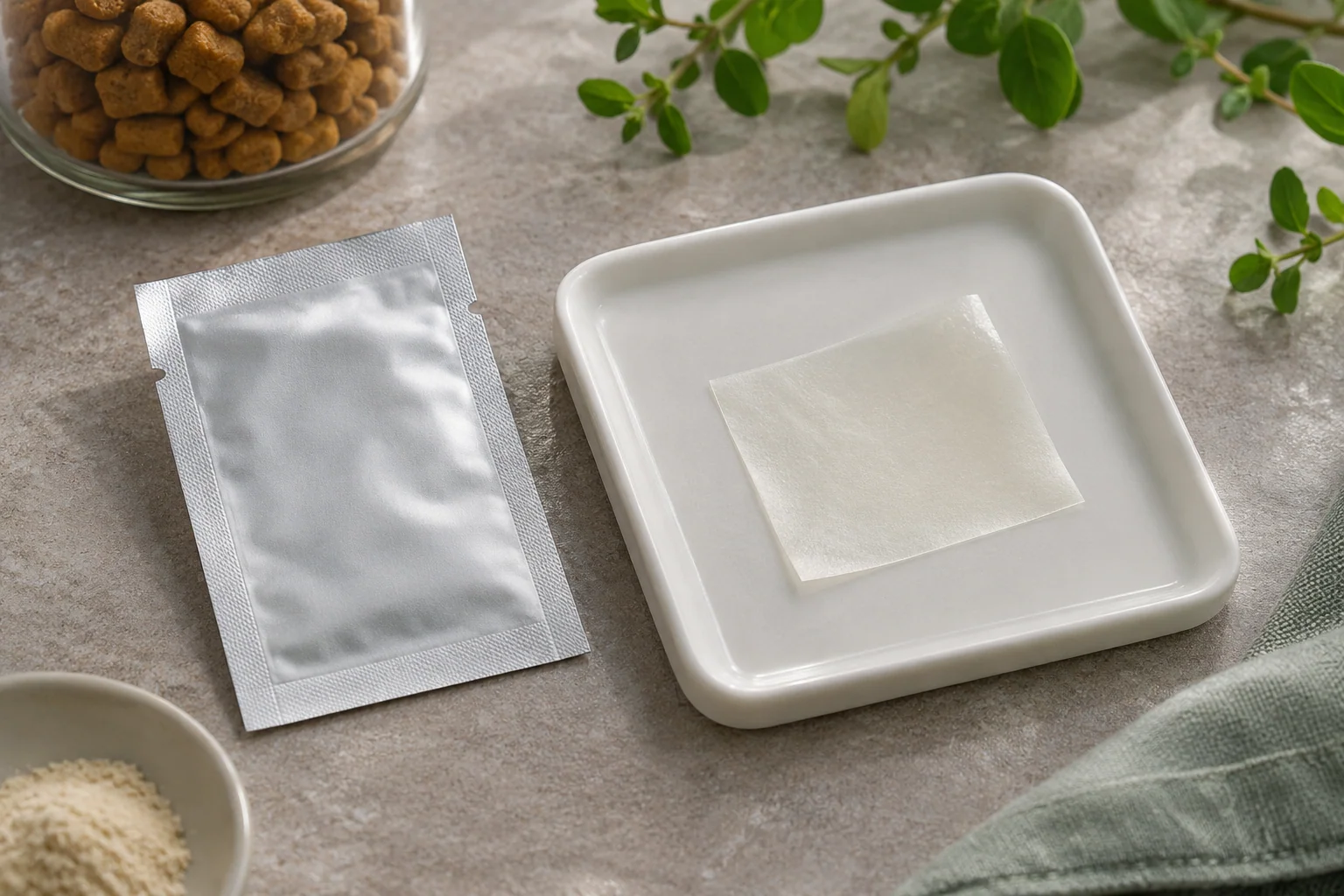
Define how the film will be offered
A pet oral film project starts with a feeding method. Describe who opens the pack, how the unit is handled and how it is offered to the intended animal. Dogs and cats differ in size and behaviour, so a single instruction should not be assumed to suit both. The development brief should state the species and life stage and identify any handling concerns that need assessment.
A film is a delivery format. Its thin appearance does not establish an absorption percentage, a clinical benefit or a predictable onset of action. The formulation, amount delivered and conditions of use remain part of the product evaluation. Avoid allowing a format name to make a nutrition promise that would require direct evidence.
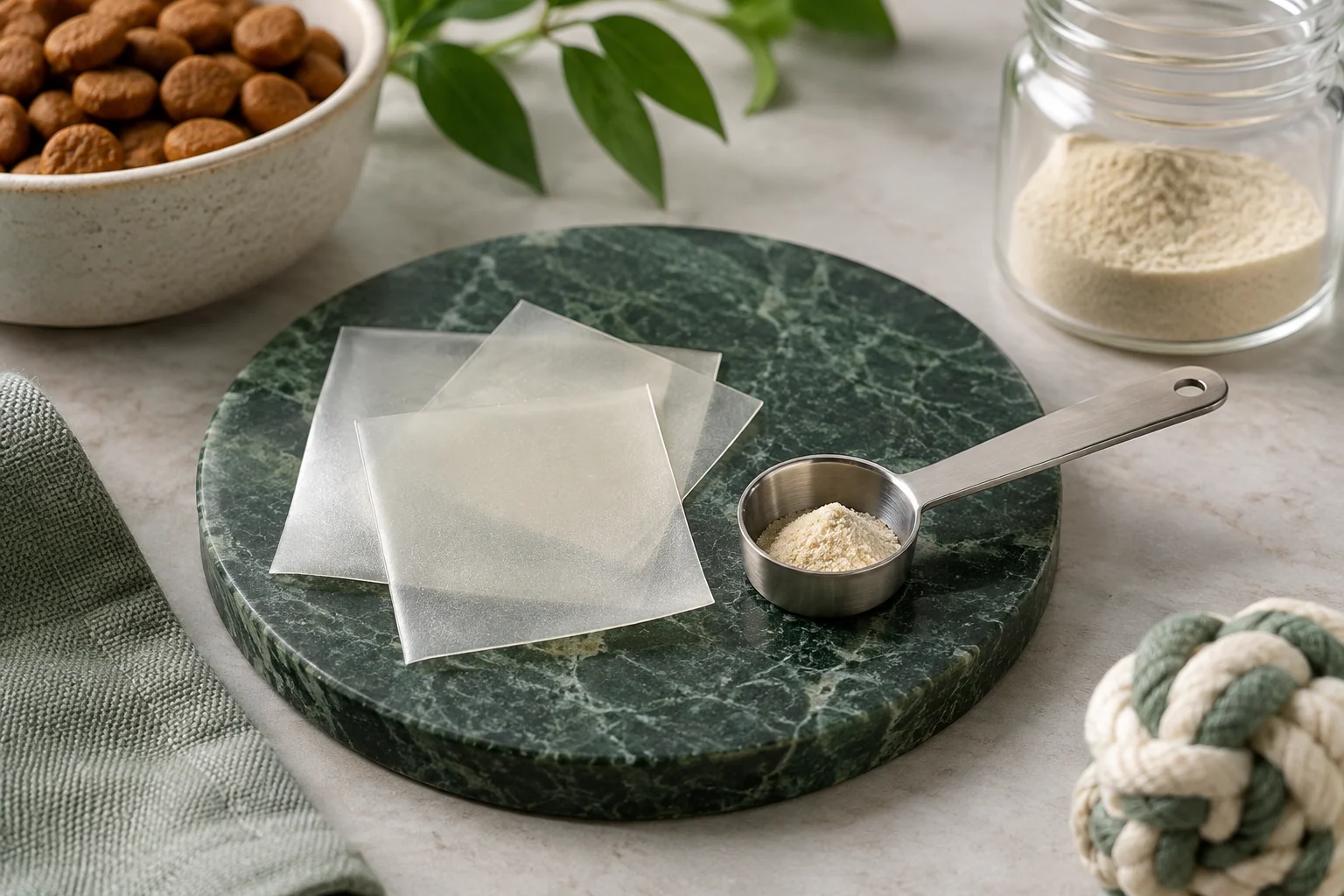
Ask whether the intended serving fits
Film thickness, strength and handling have to be considered alongside the proposed nutrition ingredients. A formula that fits into a jar of powder may not transfer directly into a small film. Request a discussion of unit dimensions and practical loading before committing to the film count on a retail carton. The amount of an ingredient per film must remain distinct from the amount per daily serving.
If more than one film would be offered, examine whether that feeding routine is realistic for the intended pet. Compare it with another format using the same nutrition objective. The result may support a film, or it may show that a powder, liquid or chew deserves a separate sample brief. Format selection benefits from an explicit serving calculation.
Translate a multi-ingredient concept into a film brief
For a custom pet ODF formula, identify botanical extracts, vitamins and other ingredients by form and proposed amount. Ask how the full composition affects unit loading and repeatable handling. Joint, gut and calming concepts can be compared with a chew or powder using the same intended daily contribution; each format needs its own evidence and feeding instructions.
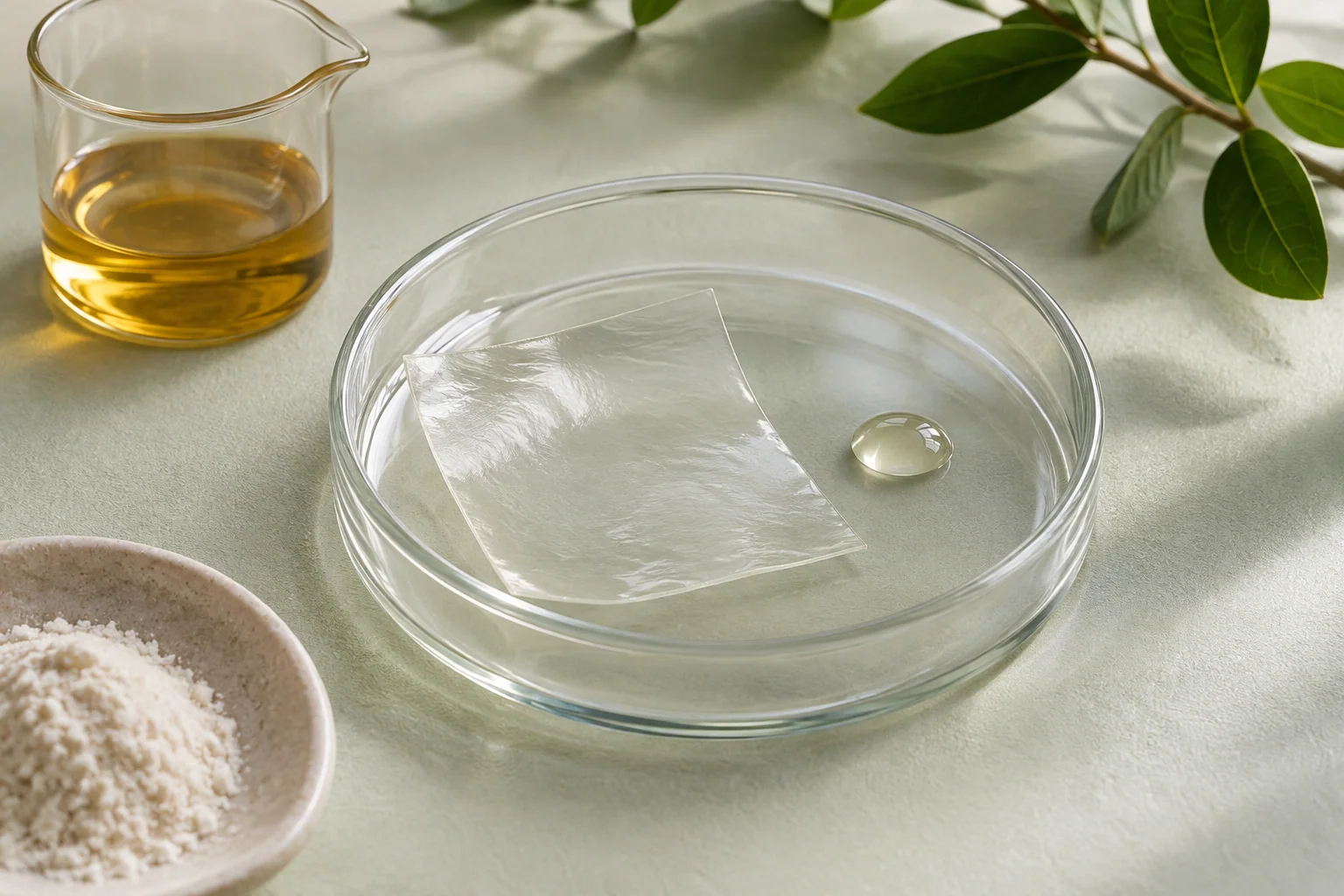
Separate disintegration from biological performance
A disintegration test describes how a film behaves under defined test conditions. It does not measure how much of every ingredient reaches the circulation in a dog or cat. A study of a particular medicine and delivery system cannot supply that missing result for an unrelated nutrition film. Test conditions and the animal species are part of the result, not details that can be left out.
The 2016 Allam and Fetih metoprolol study concerned a specific sublingual niosomal film and rabbit pharmacokinetics. It is a technical reference for that system. It is not a dog or cat study of our products. It does not support a claim that our films deliver more than 90 percent absorption or act within five to ten minutes.
Specify a disintegration method before a time claim
Record the test medium, temperature, movement, sample size and endpoint. Humidity, film thickness, solids distribution and storage conditions may change the observed result. There is no project-approved universal dissolution time on this site. A disintegration result must not be presented as proof of more than 90% bioavailability or a predictable clinical onset in dogs or cats.
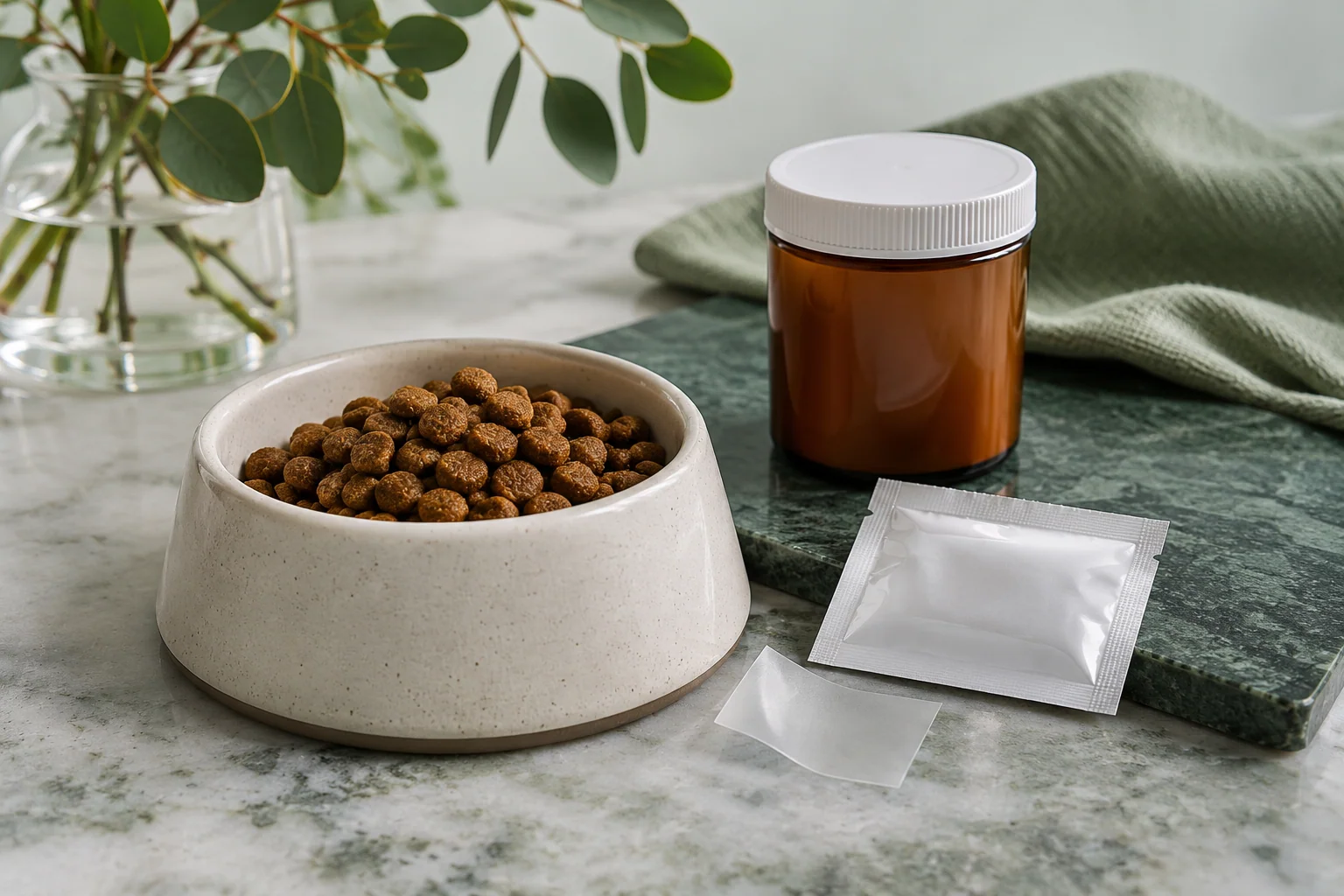
Design an acceptance evaluation
Specify what you want a sample evaluation to observe: acceptance when first offered, repeated acceptance, handling by the owner and any feeding difficulties. Keep the full recipe associated with the observations. A flavour can be attractive to one animal and rejected by another, and an attractive package cannot resolve that variability. Determine how feedback will be recorded before distributing evaluation samples.
A nutrition product should have clear species and serving directions before routine use. Ask a veterinarian to review suitability for animals with existing conditions, concurrent medicines or special dietary requirements. Do not use pet acceptance alone as a safety assessment. A product can be readily eaten while still requiring a formula and intake review.
Match the primary pack to the film
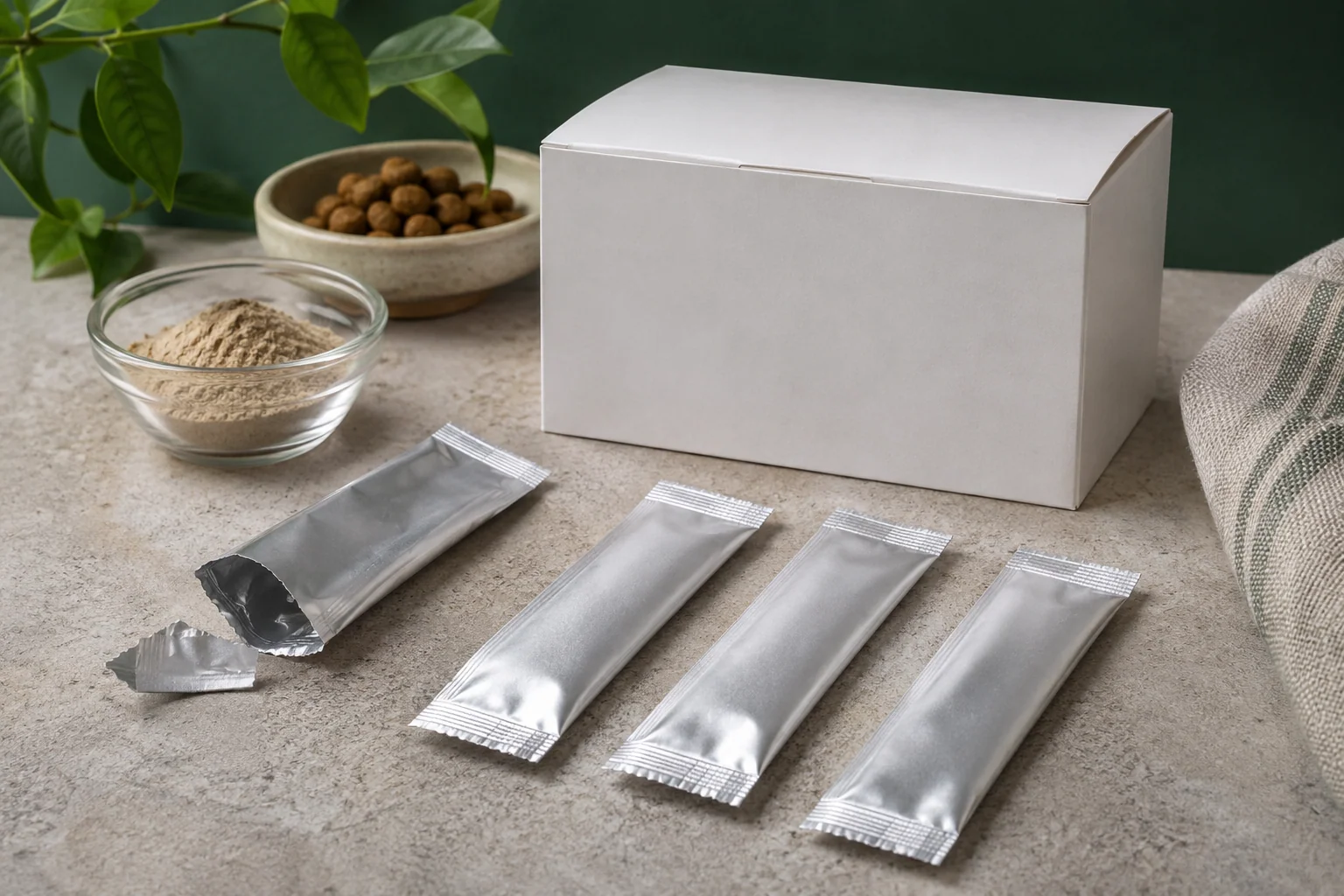
Include moisture protection, seal integrity, opening method and unit identification in the packaging discussion. Request a sample made with the intended primary material. An outer carton or decorative card may carry the brand, but the material in contact with the film and its seal determine the immediate protection around each unit.
Evaluate the pack as an owner would use it. Can the unit be removed without damage? Are directions legible after opening? Can an opened unit be confused with another product? Individually packed films may suit an on-the-go routine, while the final pack construction still needs validation for the formula and proposed storage conditions. No pack style by itself establishes shelf life.
- A primary pack assessed with the proposed formula
- A usable opening method that preserves the unit
- Directions and identification that remain legible
- Storage conditions supported for the selected construction
Request evidence at the level of the finished product
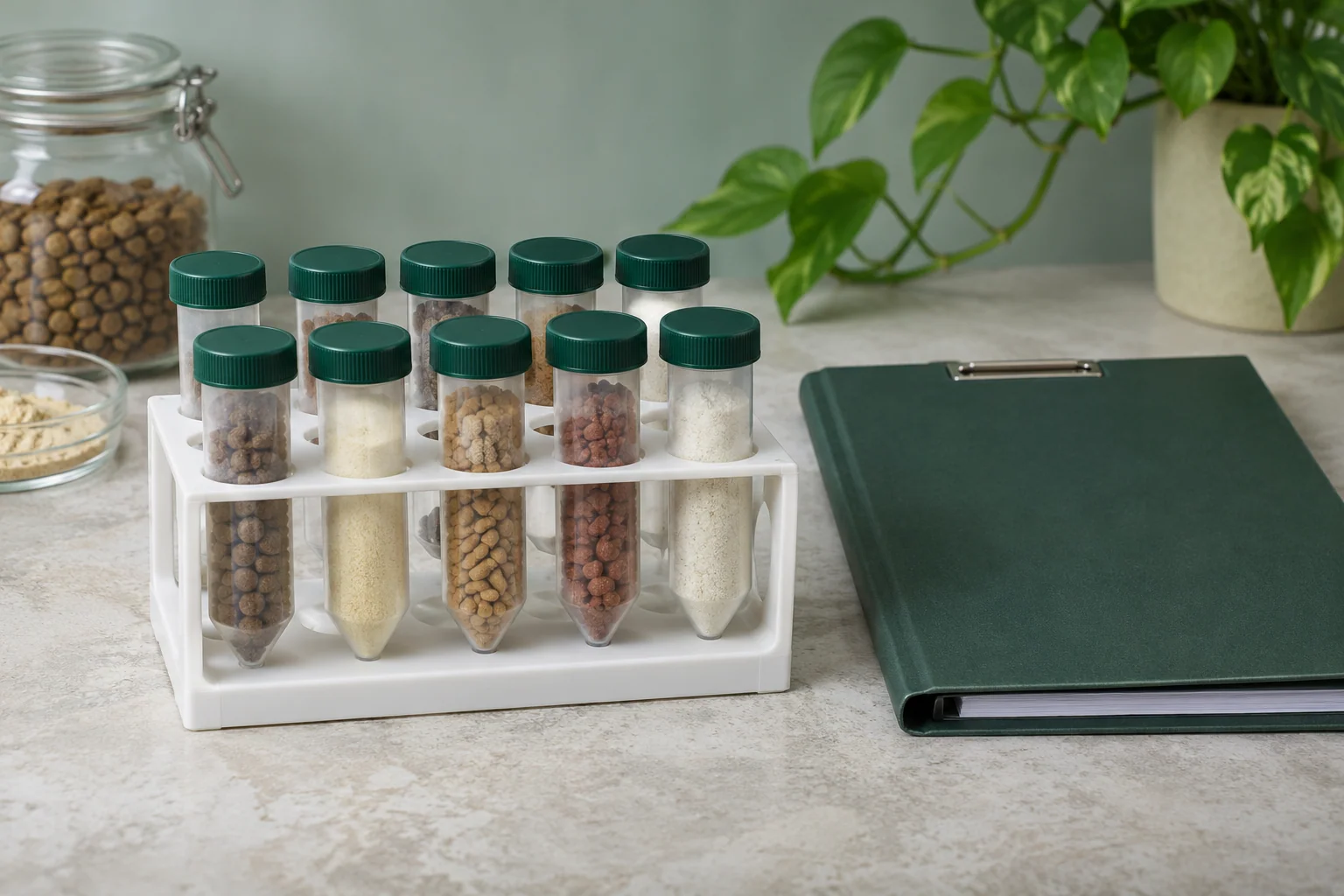
The agreed specification can address identity, unit weight and dimensions, relevant ingredient content, handling characteristics and microbiological criteria. Decide which measurements apply to the formulation and which apply to the packaging. For probiotic concepts, ask how the declared organism count would be supported through the proposed shelf life. For oils, distinguish the oil amount from the nutrients to be declared.
Our production base in China uses production standards for human oral films. The exact standard designation must be confirmed for a project. That production description does not establish pet-specific safety, palatability, stability or approval in a destination market. Product specifications and a COA are available; additional third-party testing can be arranged.
Make the commercial decision after the technical review
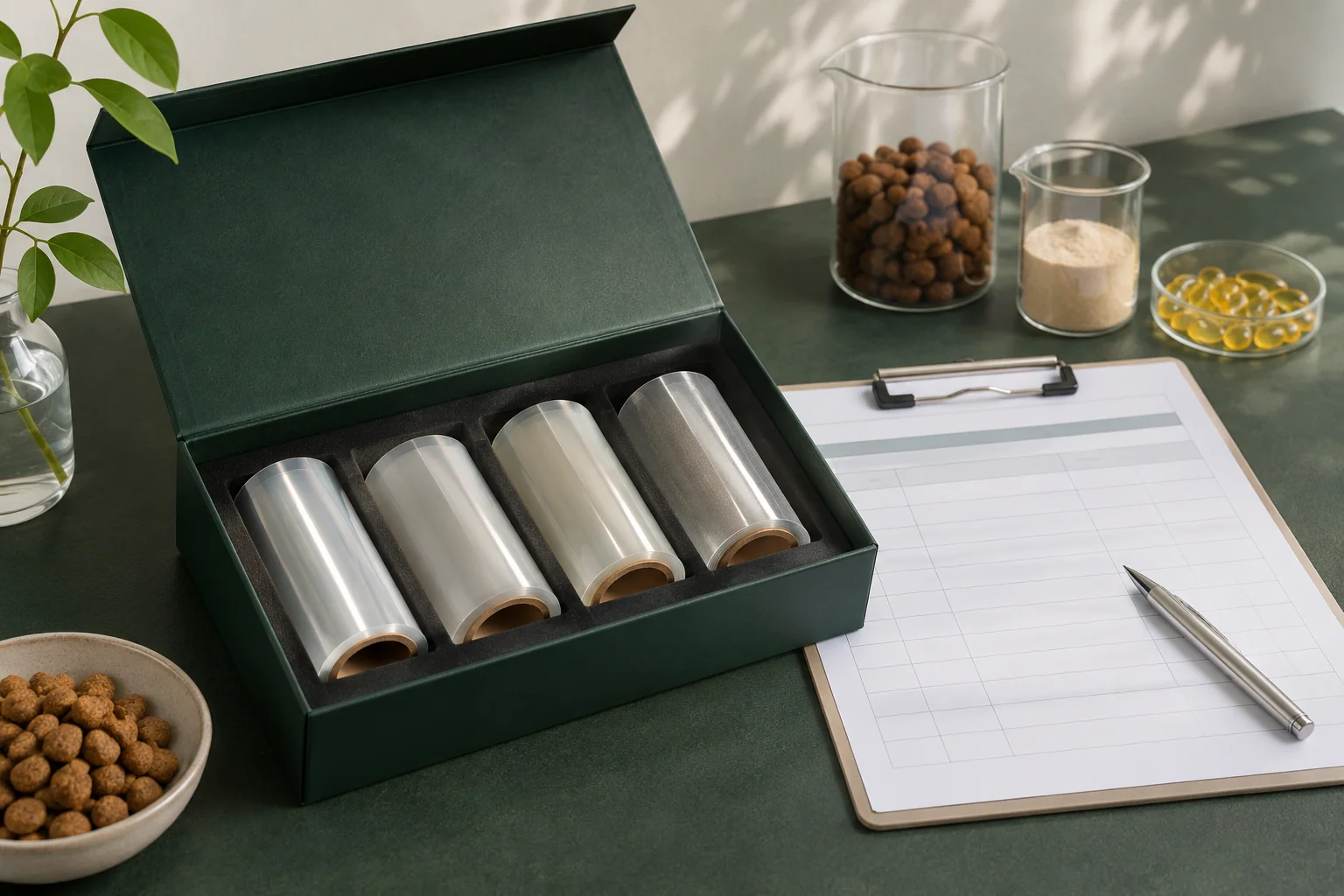
The current minimum is 60,000 oral films per SKU. Mixed-order and packaging allocations require confirmation. A typical box concept contains 10 to 20 films; the final count follows the feeding directions and packaging plan. New formula costing usually takes about one to two days. Development, samples and delivery have separate project schedules.
Send the target animal, nutrition direction, expected daily contribution and sales market when requesting an oral film discussion. Include any ingredient exclusions and your preferred pack count. Those details allow the film format to be assessed against the product you need, including the cases where another format offers a more practical route.
Keep pack construction in the commercial review
A pet oral film private label quotation should name the unit specification, sealed primary material, card or carton construction and number of films per pack. The current starting minimum is 60,000 films per SKU. A different card layout or retail count does not automatically establish an accepted mixed order.
Nutrition information for OEM/ODM planning. Individual pet care decisions belong with a veterinarian.